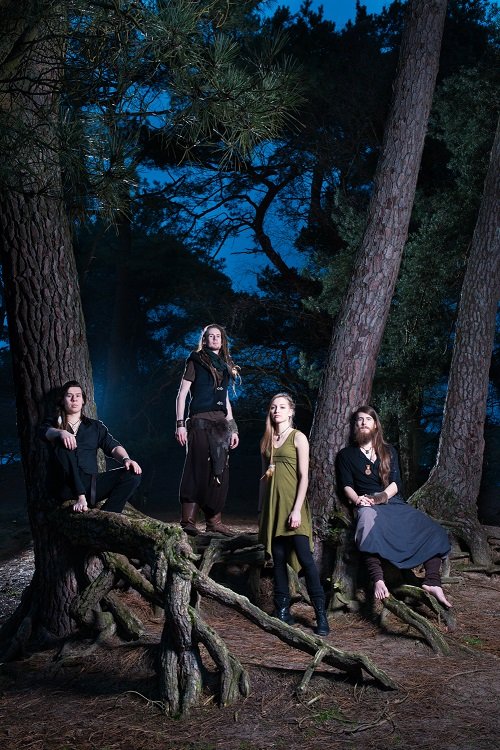
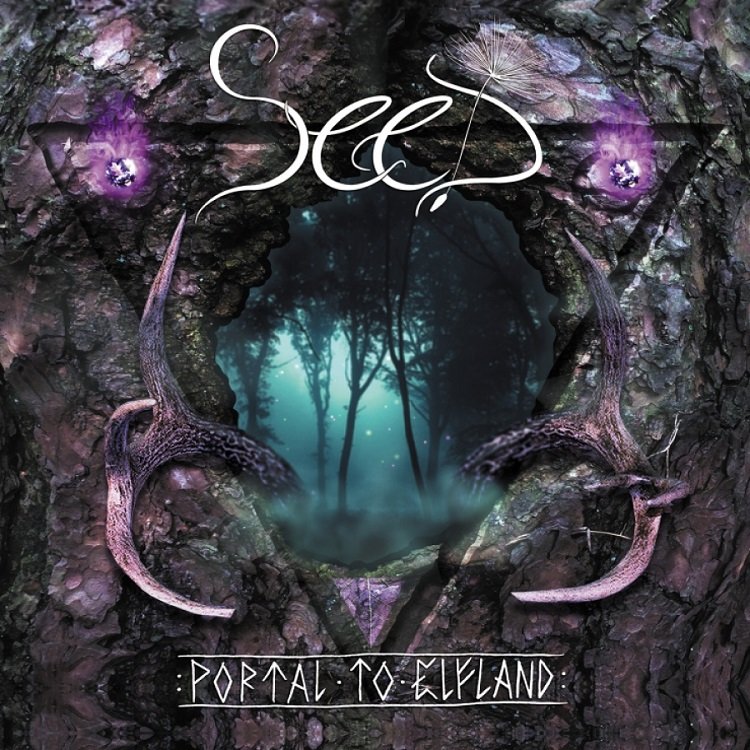
Once more we got a chance to review an album before it’s released, and this time we have had the honour of listening to Portal to Elfland, the first full length album of the Dutch Paganfolk band SeeD. We’ve also asked Koen van Egmond, the band’s lead singer and flautist, to give you some background stories to the tracks.
The band has a strong connection to nature and myth, which resonates through the entire album, just like for instance Omnia, and it is therefore not a surprise to hear strong “early Omnia” influences in their music.
Read all about
the wonderful mythology behind the songs that read like fairytales. Get a glimpse into the minds of bands creating new music, and see if you can connect with the thoughts and emotions that this album invokes!
SeeD – Portal to Elfland (2015)
29Jul
celtadmin
1 Comment
Once more we get a chance to review an album before it’s released, and this time we have the honour of listening to Portal to Elfland, the first full length album of the Dutch Paganfolk band
SeeD.
As a band they are deeply rooted in nature and myth, and this resonates through the entire album.
We have also asked Koen, the lead singer and flautist of the band, to give a little background information about each track.
Track 1: The Veil
CeltCast:
The first song, ‘The Veil’, sets the atmosphere for a mystical journey, which is of course very appropriate for and album which is intended to form a Portal to Elfland. During this track there is some playing going on with the stereo image of the music, which definitely gives it a very mysterious feel.
Koen:
An intro that I think speaks for itself and acts as an introduction to open the listener up to the concept of the Portal to Elfland.
Track 2: Portal to Elfland
CeltCast:
The second track is also the title track for the album, ‘Portal to Elfland’. The first thing to notice in this song is the very heavy bass presence. The song continues to flow in this mystical atmosphere even through the chorus. There is a depth in this track that gives it an almost shamanistic feel. As a personal preference I would have liked to have heard some more high end in this song, but there’s no accounting for taste is there?
Koen:
A song in which the listener experiences the journey of stepping through the portal. You can already hear the creatures that you can encounter, and through the sounds of a creaking ship and turning sails it creates the atmosphere of being on a journey and being carried on the currents through the portal. (Mental image: Think of the scene in Pirates of the Caribbean where the ship goes over the waterfall to Davy Jones’ Locker.)
Track 3: Twilight
CeltCast:
Next up is the song ‘Twilight’. If I were to pick one word to describe it it would probably have to be ‘intriguing’. First there is the lightness of the flute, and then comes some deep percussive bass. This song slowly builds to completion from the start. Just over halfway in there is an energy boost that takes control of your body, almost forcing you to move.
Koen:
We musically show the onset of the evening. The sky turning from blue to pink, to purple, to red. And the creatures that become active that time of day, along wit hall the mystique of the dark parts of the forest and the rest of the world.
Track 4: May’s Jig of Lunacy
CeltCast:
And then comes ‘May’s Jig of Lunacy’. For a track with ‘jig’ in its name it starts of rather slow, but then comes the power! This is in my opinion the first track of the album that clearly shows a connection to the earlier work of
Omnia.
It’s very powerful, very musical. Heavy on the percussion, this is a very strong song!
Koen:
A jig written for the creatures of the Fae world, that don’t like to play according to the rules as set by man. Something we often see in Balfolk dancing. It’s possible to dance a jig to it, but a true Balfolker, fixated on the rules of the dance, will go mad because the steps don’t fall the way he or she would want them to. Lunacy drives people crazy, think about witches that are strongest during a full moon and in the old days would have been labelled crazy and dangerous.
Track 5: Nymph Hunt
CeltCast:
Whom among us doesn’t like the idea of a little ‘Nymph Hunt’? This fifth track of the album is also very reminiscent of early Omnia music. Closing your eyes, it’s easy to envision a hunt after beautiful Nymphs, that leads you across streams and through forests, with the Nymphs staying ahead of you, but only just…
Koen:
An up-tempo song in which we act out the playfulness of being free in nature, especially the male and female aspects that are always teasing each other. You can see a mental image of a Nymph pretending that she doesn’t want to get caught by the horny Satyr that is chasing her.
Track 6: Torc
CeltCast:
Track number six is called ‘Torc’. The intro of the song is very deep, almost as if it’s meant to bring you into a trance. Although the song does climb out if that depth the trance-like state continues. It feels as if this song, in particular the flute, is trying to tell a story. The transitions between energy levels within this song happen so naturally that you can hardly even notice your mood change. A very musical song.
Koen:
A song in which we show our faith in totem animals. It starts with Omnia’s ‘Bran’ acting out a raven, but it quickly flows into the ‘Torc’ part that we wrote that symbolises the boar. I myself have already been on a journey with my totem animal the heron for years and the interconnection is becoming stronger every day.
Track 7: Aerie
CeltCast:
Where ‘Torc’ starts off deep, the next track ‘Aerie’ starts off high, open, light. A feeling of magic and Fae, and a sense of urgency that this song contains an important story that needs to be told. Close your eyes and find out what that story is…
Koen:
A musical representation of the story of Aerie, a character from the well know RPG game series Baldur’s Gate. A winged elf that is viciously robbed of her wings and now has to live among humans without the freedom she once knew and without ever seeing her kind in the high heavens again.
Track 8: Brave
CeltCast:
The eighth song signals that we are already halfway through the album, unfortunately. The track isn’t only called ‘Brave’, it’s a song about being brave and finding your own way to change the world around you. This song has some very, very inspiring lyrics! A very powerful song, feeding the soul with feelings of strength and possibilities. I’m loving the positive vibe from this!
Koen:
A song that speaks of the hard choice of staying true to ones self or to go with the flow with life and the people around you. The choice to conform yourself tot he more ‘normal’ people or to just be your happy self. In this song we encourage you to be brave, and despite the fact that it can be difficult at times, to stand strong and be yourself.
Track 9: Green Man
CeltCast:
Next up is a track with a very familiar name, ‘Green Man’. An iconic figure in Celtic mythology, and very common in neo-pagan circles, the Green man has had many songs written about him, and this song is a worthy addition to that collection. The chants, with a very subtle harmony, create a very danceable ode to this figure of mythology.
Koen:
A song in which we honour the Green Man. A leafy face in many shapes and sizes that symbolises the primordial power of nature and the changes that that power can affect.
Track 10: Lady of Laughter
CeltCast:
‘Lady of Laughter’ is, as the title suggests, a very cheerful song. Slightly more up-tempo than some other songs on this album it conjures up images of faeries in the forests and fields, laughing and dancing, lighting up their surroundings with mischief and happiness.
Koen:
A female fae that Koen encountered, and with the inspiration that she gave him we wrote this song. In it a message to respect Nature and the Fae, because they can be unrelenting in their retribution.
Track 11: Land of Melancholy
CeltCast:
Quite the opposite, the next song ‘Land of Melancholy’ is slower and more down to earth, though one shouldn’t be fooled by the title, the song certainly isn’t depressing in nature. It actually becomes rather powerful further on in the track. The song ends with quite the surprise on the lyrics. I did not expect that.
Koen:
A fairytale written by Koen about two lovers who accidentally stumble into the Land of Melancholy and there fall under a spell of the rulers lament, because she has lost her lover. As long as they are enchanted they will dance on the fields of melancholy and will never return to what they left behind in the lands of man. Again a testament tot he unrelenting nature of the Fae.
Track 12: Gathering Mushrooms
CeltCast:
Starting with some really nice percussion and the clear and crisp voice of Sara ‘Gathering Mushrooms’ is something different. The song has a familiar feel, even though I wouldn’t be able to pinpoint it. The combination of the strong and somewhat heavy percussion and the high and happy sounds of the vocals and flute make for a very interesting and entertaining song!
Koen:
A traditional, arranged by Michael Philip McGlynn, known from Anuna. This song is about a bo that sees a beautiful young woman bent over to gather mushrooms early in the morning. He is very taken by her and this ends up in a very intimate loving ritual. (They both ‘sat down’ together, oh)
Track 13: Merry Making
CeltCast:
‘Merry Making’ starts with a similar bass sound to the percussion as ‘Gathering Mushrooms’, but the song picks up almost from the start with very enchanting flute play. Throughout the song there are several changes in rhythm that make this track very fun to listen to. A very merry track, leaving you wanting to join in the making…
Koen:
A song written to capture the atmosphere of a flaming campfire, the bottles of mead and the nice music and people at a festival. Somewhere near the end a 7/8′ part, to show that sometimes alcohol can have a different, less happy effect. And also just because it can be nice to write some challenges into more straight folk music to keep the musicians in the crowd entertained.
Track 14: CPPS
CeltCast:
The energy in ‘Crazy Pagan Party Song’ reminds me of the happy summer festival feeling of
Virelai.
Fast rhythms, fast melody, I’m definitely going to want to see this song played on a festival main-stage somewhere, with a few thousand people dancing in circles in front of it! It will wear the dancers out but will give a festival an amazing power-boost!
Koen:
Well, this accurately represents the atmosphere of our rehearsals…
I usually choose one track from the album as a favourite, to give some indication, some context, as to how I listen to the album and what I’m looking for. For this album I would definitely have to go with ‘Twilight’. The variations in the song, the different levels, they all make the song very interesting and certainly entertaining!
One thing definitely worth pointing out is the artwork. The band logo, the antlers, the tree bark, everything on the cover comes together in a way that just calling it “artwork” isn’t enough. I would actually call it Art, with intentional capitalization! I do hope they will sell posters of this, because I really want my very own Portal to Elfland at home!
Something that is also very noteworthy about this album is the way in which it was recorded. As opposed to the regular way of going into a studio and recording each instrument separately SeeD had taken a very different approach. Their “studios” were the forest and in some cases a church, and they recorded the track in more of a “live” style, playing together as if they were on stage and in that way capturing the shared vibe on the album.
Overall this album is very interesting in several ways. First simply because of the music. It is music written and played out of a passion, and that is something that you can really hear in every track. The second reason that this album is interesting is because it show a lot of promise. Is it an immaculate album? No, I can’t say perfection has been accomplished. The recording and mixing of the album are good, yet not at par with the major studios in the world. I also believe that Koen’s singing will become more confident, when in time, through practice and experience, it will have improved. But you know what? Even though there are other minor things that I could point at, overall I really love the album! I think it is a gem, a must-have in the Dutch Paganfolk scene, and I am a very happy man for having a copy of it! I can’t wait to see their performance at Castlefest and I am very curious as to what the future has in store for SeeD!
SeeD are:
Koen van Egmond: Burke whistles in F & D, Susato double whistle in C, Sallow flute in D, Xaphoon, Tombak, Offerdalspipa
Lars van Egmond: Backing vocals, guitar and percussion (davul, didge, darbuka and jaw harp)
Sara Weeda: Ashbury Irish bouzouki (open D tuning) called ‘Bronagh’, Brendan White double skin Irish bodhrán called ‘Donar’, Cort Earth acoustic 12-string steel guitar called ‘Ysis’.
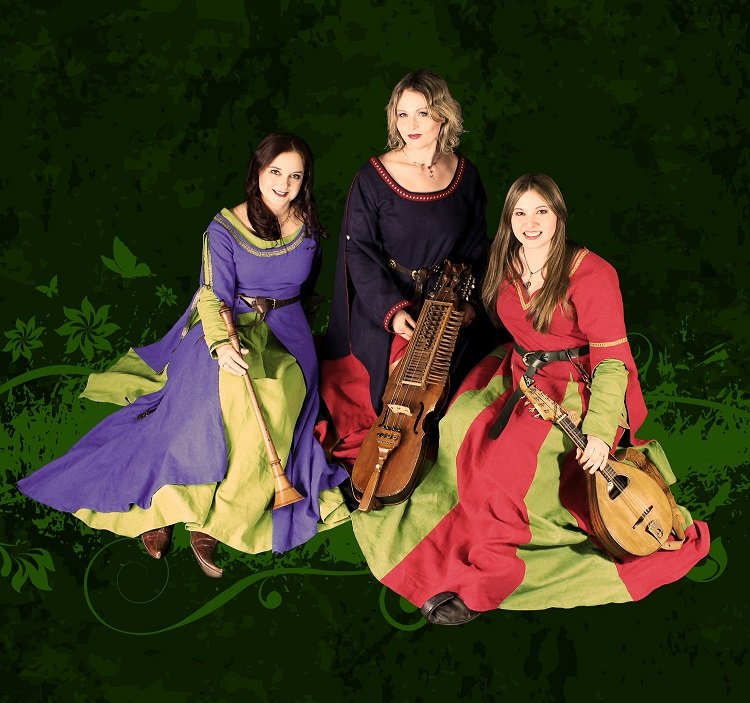
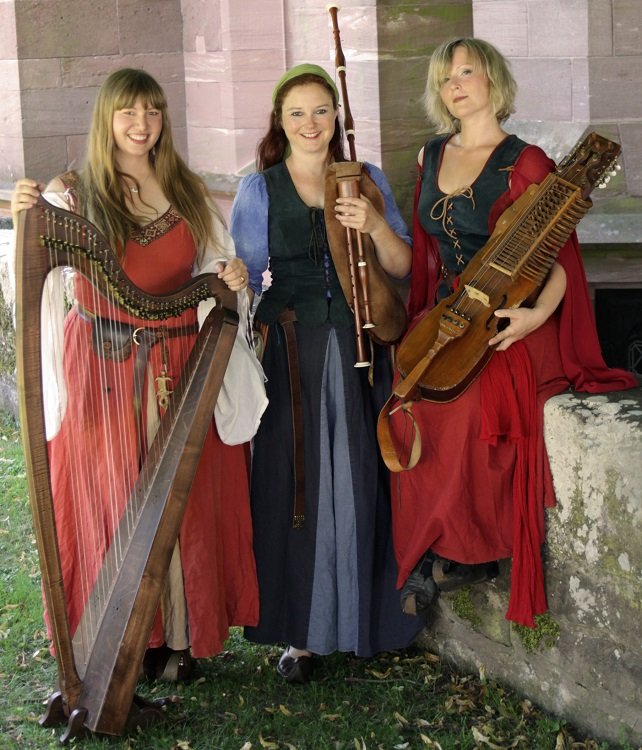
And that, of course, means that it’s time for another Thursday Theatre. Our brightest spotlights this week are aimed at
‘Die Irrlichter’,
as our lovely Lena has made
a review
of their latest album ‘Zaubergarten’.
Read all about Lena’s thoughts on the dreamy atmosphere this album creates. About the danceable tracks and the easy listening songs. About their fresh new songs and fresh new versions of some lovely traditionals.
Let Lena take you a journey into the world of ‘Die Irrlichter’! 🙂
Die Irrlichter – Zaubergarten (2015)
23Jul
celtadmin
1 Comment
It’s Thursday again! 🙂
And that, of course, means that it’s time for another Thursday Theatre. Our brightest spotlights this week are aimed at Die Irrlichter, as our lovely Lena has made a review of their latest album “Zaubergarten”.
Read all about Lena’s thoughts on the dreamy atmosphere this album creates. About the danceable tracks and the easy listening songs. About their fresh new songs and fresh new versions of some lovely traditionals.
Let Lena take you a journey into the world of Die Irrlichter!
Die Irrlichter – Zaubergarten
After waiting 5 years
Die Irrlichter
finally released their 7th studio album.
A long time of patiently waiting as come to an end.
‘Zaubergarten’ (Magical Garden)
is a thematic album that contains mainly soft dreamy songs that invite the listener to dream away. All songs have something to do with magic, it’s either in their story or simply in the music itself. On this album ‘Die Irrlichter’ have made renditions of three well known songs, which I’ll allow myself to call Medieval Evergreens: ‘Sator arepo tenet opera rotas’, ‘Merseburger Zauberspruch’ and ‘Bergtrollets firei (a.k.a. Herr Mannelig)’ are all songs that have been interpreted by lots of bands already and will be interpreted by many other bands in future, for sure. ‘Die Irrlichter’ versions are fitted to the dreamy magical atmosphere of the album.
‘Sator arepo tenet opera rotas’ is one of the oldest and most often covered traditional magic courses of medieval times. The interpretation of ‘Die Irrlichter’ is sung in their typical choir singing, while a danceable atmosphere is being created using lots of flutes and a mystical bagpipe tune.
‘Loscher Bienensegen’ is a mystical song that is accompanied by a soft tune, which can be heard throughout the album.
‘Merseburger Zauberspruch’ is a soft and dreamy ballad that invites the listener to just close the eyes and dream away. It is one of the featured traditionals.
‘Die Nixen’‘s lyrics are by the German author Heinrich Heine and lay out the moral of this storytelling song. ‘Die Irrlichter’ are famous for using this format for their songs. It’s a lovely song that requires the listener to pay close attention to the tale that is being told.
‘Skebergslaten’ is a traditional Swedish harp song. Some mystically played flutes complete this magical instrumental song, carrying it’s beauty to the listener.
‘Zaubergarten’ is another dreamy ballad and the central song of the album. Soft voices, harps and just a pinch of violin once again create a dreamy atmosphere, in which you are invited into this magical garden.
‘Elfenflug’ is the next instrumental song on this album. To me at least, these are the strongest, since it’s only their music that electrifies you. A fresh and vivid song that is hard not to start to dance to.
‘Thora und der Lindwurm’ is another storytelling song, based on an old Islandish saga. The vivid rhythm and the typical female voices of ‘Die Irrlichter’ create their own magic once again.
‘Bergtrollets frieri (a.k.a. Herr Mannelig)’ is the third traditional, which many other artists have played before. This ‘Die Irrlichter’ rendition is a soft ballad.
‘Bourré Abière’ is a French traditional played on a nyckelharpa with an uprising, almost oriental, rhythm that is bound to set you off dancing!
‘Die Fee’ contains the manly yet soft voice of Martin Seifert that sings along with the fairy vocals of ‘Die Irrlichter’. It tells us the story of a young man that has to choose wisely for a wish that will be granted by a fairy. A well known violin played by Charles Matthew Rouse makes the cooperation of ‘Die Irrlichter’ and ‘Die Streuner’ perfect. Another fairytale told in a dreamy song.
‘Mittsommerreigen’ is an almost pagan style instrumental song with flutes and drums that is aptly named ‘Midsommer dance’.
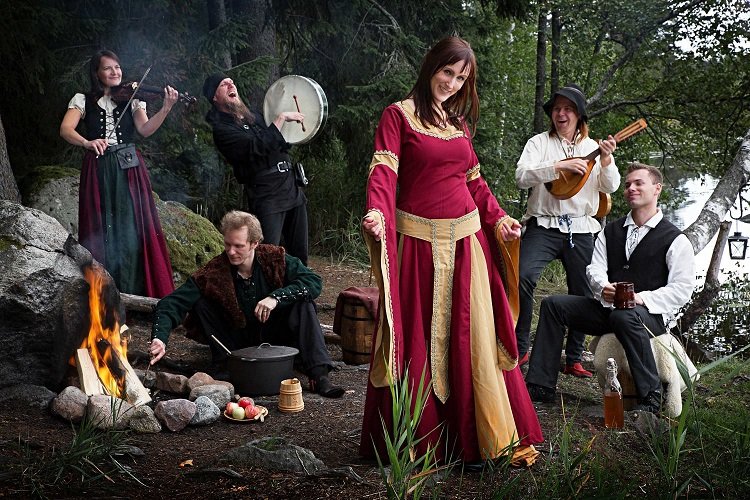
Several months ago we were pleasantly surprised as out of the blue two CD’s popped into the mailbox. They were by a Finnish band that we had never heard of,
Greenrose Faire.
A band originally formed by Tomi Hyttinen and Niilo Sirola with a background in hard rock music, they started this group with only one rule: “No electric guitars”. And for this I say: Thank you! Because even though I do appreciate the odd electric guitar riff, Greenrose Faire has created their own unique style of music, and it definitely makes me happy!
I first fell in love with their music when listening to their previous album Home Is Where The Heart Is. The clarity of the vocals, the catchy tunes, the lyrics that conjure up deep seated feelings, it combines all of that in a very well blended musical experience. But enough about their last album, we were fortunate enough to get the new one before the album release and do a review on that! For this review we took a slightly different approach. We reviewed one track at a time, and asked Greenrose Faire to supply us with some background on the tracks from their perspective.
Track 1: Too Hot To Stop
CeltCast:
Powerful and energetic from the start. This song has some very tight drum sections. There is a definite party atmosphere in the chorus. I would consider this to be a great track to end a concert with. You know, before the encore, because they are too hot to stop!
Greenrose Faire:
It’s the first track of the album and it starts the fire that will not go out. This will also be the opening song at our coming live shows, and it is to remind everyone to get on their feet, put their hands in the air, and give in to the music and stomp and dance and leave all the mundane worries aside for a while.
Track 2: Freedom
CeltCast:
An epic song, telling a story. The violin is very moving in the track, later it becomes highly energized, and a game starts between the violin and the keys. There is some serious bass in this track, I really enjoyed that! The song keeps you captivated from start to finish, over six minutes. I’m loving the vocals, same as I did their previous album.
Greenrose Faire:
I love song of epic proportions in the vein of Braveheart. How Deep Love Can Be? It also has a 3-minute violin/organ speed solo in the middle, because, why not?
Track 3: The Tavern
CeltCast:
The song starts off feeling very medieval, and I’m definitely feeling the tavern here! It slowly but steadily builds up momentum and mass, and then the party starts! It makes me want to grab a tankard of ale, and maybe a barmaid for a dance. “Here we go, here we celebrate the day!”
Greenrose Faire:
This is hats off to all the world’s taverns. When you feel that you have to go raise one or two pints to the parched lips, it is comforting to know there’s your own tavern where the staff is waiting just for you!
Track 4: Here Waiting
CeltCast:
It starts off quite laid back, and with a title like “here waiting” it definitely creates a feeling of anticipation. Sounding rather intimate, I feel a close connection with the person waiting. Varying in intensity, the song keeps the listener interested in the rest of the story throughout. I hope she found the love she was waiting for.
Greenrose Faire:
This was one of the very first songs Tomi wrote for Greenrose Faire, and now we felt it was finally time to put it on tape in the grandeur it deserves. It’s of a love story through dark times, and of waiting and longing and not knowing if you’ll ever see your love again.
Track 5: Tell You A Story
CeltCast:
The track starts off very interesting! It has a very intriguing rhythm, somewhat of a tribal feel. The bass in the drums reverberate thought-out the body, I really want to hear this track through some massive stage speakers. Even though I really noticed the drums, the rest of the instruments, as well as the vocals, are very well-balanced. A quote from the track is “share the feeling with me”. Well, to me this track feels like sitting around a fire in a cave in the mountains, with good friends, drinking, laughing and sharing stories. Listened to it a couple of times in a row.
Greenrose Faire:
This song is about a mystical place where people once gathered to tell and listen to stories. It is not an easy place to find but it’s worth the trouble. This was also written during the very first demo sessions but has went through various arrangements and styles, before settling into this minimalistic jig-style arrangement featuring bodhran player Tuuli Rantala.
Track 6: Long Time Ago
CeltCast:
Nostalgia reigns supreme with this song. Maybe not the most powerful or energetic track on the album, but a good sound to take you back to older days. This track is very smooth, maybe even slippery, but Greenrose Faire keeps it on track and takes it home.
Greenrose Faire:
Long time ago an a place far away… A melancholy song of times long gone. This might be closest to Finnish schlager we’ve ever gone, and features prominently Pete’s Indian travelling harmonium to keep things interesting.
Track 7: Running Away From My Dreams
CeltCast:
This sounds like it will be amazing live with an enthusiastic crowd. It’s hard to sit still with such energy blasting from the speakers. Also, it’s these types of tracks that make me happy I don’t have any neighbours. A very danceable track, running away from dreams has never sounded like such a party.
Greenrose Faire:
This differs from all the other songs in that we did not have a change to play it together at all before hitting the studio, so it came together piece by piece in the recording phase. Therefore it’s a bit of a surprise that it turned out to be maybe the most fun of all to play live. This song definitely called for Hurdy-Gurdy, so we got Lajos Oláh to play some. The story is about a virtuous and down to earth girl who for some reason has dreams of being famous and beautiful and shallow, and abhors the idea when waking up.
Track 8: Together We’re Strong
CeltCast:
More dancing, only this time it’s more like organised Balfolk dancing. Not only is that the feel that the sound gives, but the lyrics, “take my hand, I will guide you through the night, and see, together we’re strong” certainly sound like an invitation to dance to me. The violin play in this track sounds more classical then folk to my ears, but the overall atmosphere of the song does scream “Greenrose Faire”, and it’s a testament to the versatility of the band if you ask me.
Greenrose Faire:
The text was originally that of a grimy battle song, but for some reason that did not go well with the upbeat melody so it was reworked as an ode to camaraderie. Whatever comes, together we’ll survive anything. This was as true in the old times as it is today.
Track 9: Feed The Flames
CeltCast:
The title track of the album, this song is very typical of the group, as it definitely combines the somewhat older Folky feel with many modern influences. A song with lots of body, there is never a dull moment throughout the track.
Greenrose Faire:
This is one of the few songs we had already played live before starting recording it, so we already knew it well, and it then rightly became the title song of the album as well. It sums up perfectly the themes of the album: roaring fire, loyal company and good stories. No matter how dark and cold it is, no one is left alone.
Track 10: Laulan, Luritan
CeltCast:
The final track of the album, unfortunately. But the band did save a surprise for us. For this last song they mixed it up with not only a different lead singer, but also a different language. Salla steps aside to give way to Tomi, who sings this song in Finnish rather than English. A whole other direction for the band as far as we know, one more example that Greenrose Faire will not be pinned down if they don’t want to.
Greenrose Faire:
Tomi has often been asked to sing a song, but it was not until coming up with this song and text before he agreed to. The text is in Finnish and uses a bit archaic language in places, so good luck finding out what it is the hairy guy is singing about…
After having listened to the entire album several times I can definitely say that Feed The Flames delivers a sound that we have grown to expect from Greenrose Faire, without sounding “more of the same”. The rock influences and love for acoustic folk combine to a unique style that reverberates not only through this album, but it also combines it with their previous work. The songs are long but stay interesting, the band members are skilled and versatile, and together they make up a winning formula, whatever type of song they play. It’s a style that we hope to be able to enjoy for many years to come!
Choosing a favourite track from this album wasn’t very easy. Two songs competed closely, but in the end The Tavern had to give way to Tell You A Story. The interesting rhythms, the feeling it invokes of sharing a great evening with great friends, it all adds up to a marvellous song that for me captures the essence of what I feel about this band and this album.
It’s worth noting that Greenrose Faire are working their way down to the rest of Europe, with at least one Dutch show planned so far at
Elfia Arcen
in September. If you’re able to attend one of their shows I would highly recommend it. I know we will!
To provide the best experiences, we use technologies like cookies to store and/or access device information. Consenting to these technologies will allow us to process data such as browsing behavior or unique IDs on this site. Not consenting or withdrawing consent, may adversely affect certain features and functions.
Functional
Always active
The technical storage or access is strictly necessary for the legitimate purpose of enabling the use of a specific service explicitly requested by the subscriber or user, or for the sole purpose of carrying out the transmission of a communication over an electronic communications network.
Preferences
The technical storage or access is necessary for the legitimate purpose of storing preferences that are not requested by the subscriber or user.
Statistics
The technical storage or access that is used exclusively for statistical purposes.The technical storage or access that is used exclusively for anonymous statistical purposes. Without a subpoena, voluntary compliance on the part of your Internet Service Provider, or additional records from a third party, information stored or retrieved for this purpose alone cannot usually be used to identify you.
Marketing
The technical storage or access is required to create user profiles to send advertising, or to track the user on a website or across several websites for similar marketing purposes.
 Home
Home  About us
 Once more we got a chance to review an album before it’s released, and this time we have had the honour of listening to Portal to Elfland, the first full length album of the Dutch Paganfolk band SeeD. We’ve also asked Koen van Egmond, the band’s lead singer and flautist, to give you some background stories to the tracks.